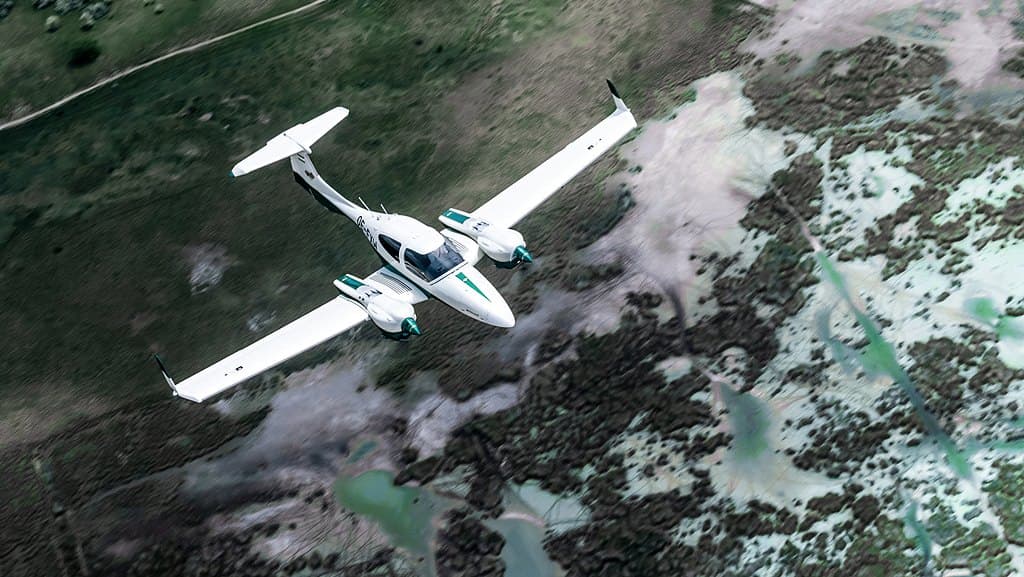
The CPL(A), or Commercial Pilot Licence for aeroplanes, is the EASA licence that lets you fly for pay: as pilot-in-command of single-pilot aeroplanes in commercial air transport, as co-pilot in commercial air transport, and as pilot-in-command or co-pilot in any other operation, such as aerial work (FCL.305). It is issued with 200 hours of total flight time, including 100 hours as pilot-in-command, after professional theory exams in 13 subjects, a Class 1 medical and a skill test. On the modular route it follows the PPL(A); integrated courses also accept beginners.
What does CPL(A) stand for?
CPL(A) stands for Commercial Pilot Licence, with the (A) marking the aeroplane category. It is issued under EASA Part-FCL, the same regulatory framework as the PPL(A), and Switzerland issues it as an EASA member state. The CPL(A) sits between the PPL(A) and the ATPL(A) in the EASA licence structure: it is the first professional licence, and its privileges include commercial air transport (FCL.305).
The PPL(A) skill test confirms that a pilot can fly safely. The CPL(A) skill test confirms that a pilot flies to a professional standard, with precision, decision-making under pressure and the discipline expected on an air transport operation. The entry requirements and the training programme reflect that higher bar.
What can you do with a CPL(A)?
The CPL(A) allows you to act as pilot-in-command on single-pilot commercial air transport operations and as co-pilot on any aircraft, and to be paid for it (FCL.305).
- -Fly charter and air taxi operations as a paid pilot
- -Work in corporate aviation, aerial survey and photography, or agricultural aviation
- -Tow banners and gliders, and take on other aerial work assignments
- -Instruct, once a Flight Instructor (FI) certificate is added to the licence
- -Progress to the ATPL(A) and an airline career, with the CPL(A) as the licence the frozen ATPL(A) is built on
The CPL(A) on its own is the entry licence for commercial flying. An airline seat needs more. Before the course for a first type rating on a multi-pilot aeroplane, FCL.720.A(b) allows student pilots currently on an MPL training course, and otherwise requires at least 70 hours as PIC in aeroplanes, a multi-engine IR(A) (held now or in the past), the ATPL(A) theory examinations passed, an MCC certificate (unless the type rating course is combined with an MCC course) and the advanced UPRT course (FCL.745.A), with listed exceptions. Industry shorthand for a CPL(A) holder with an MEP class rating, a multi-engine IR(A), the MCC and all ATPL(A) theory examinations passed is a frozen ATPL(A) (the term does not appear in Part-FCL). The Instrument Rating is optional for the CPL(A) itself and essential for most commercial employment, which is why alpaviation recommends completing the IR(A) alongside or immediately after the CPL(A) course.
Training requirements
The modular CPL(A) course starts from a valid PPL(A). Under EASA Part-FCL the flight course itself is short: a minimum of 25 hours of dual instruction, or 15 hours for a pilot who already holds an Instrument Rating. The demanding part is the experience the candidate brings to it. The course can begin at 150 hours total time, including 50 hours as pilot-in-command of which 10 hours cross-country, the licence requires 200 hours in total, and most PPL(A) holders build 100 to 150 hours first.
- -A valid PPL(A) and an EASA Class 1 medical certificate
- -200 hours total flight time at licence issue, including at least 100 hours as pilot-in-command; the flight course can begin from 150 hours, including 50 hours as pilot-in-command of which 10 hours cross-country (Part-FCL, Appendix 3, Section E)
- -20 hours of cross-country flying as pilot-in-command, including a flight of 540 km with full-stop landings at two aerodromes other than the departure aerodrome
- -25 hours of dual instruction for applicants without an Instrument Rating, including 10 hours of instrument instruction; IR(A) holders are credited that instrument time and fly 15 hours of dual visual instruction instead; a further 5 hours of night instruction applies to applicants without a night rating
- -Professional theory: the ATPL(A) syllabus of 13 subjects (FCL.515), or the CPL(A) theory course of 13 subjects (FCL.310), examined by the competent authority (in Switzerland, the FOCA) under ARA.FCL.300
- -A CPL(A) skill test with an authorised examiner; alpaviation trains the course on the Cessna 172, the Bristell B23 and the Diamond DA42
Theory can be studied by distance learning or in a full-time classroom, and the examinations are taken through an EASA-approved authority. A Night Rating is recommended before the course. From PPL(A) to CPL(A) the modular route takes 12 to 24 months, or around 12 months full-time, and it is designed for people who are working: hour-building and theory move at the pace the candidate sets.
CPL(A) vs PPL(A) at a glance
Both licences are issued under EASA Part-FCL and both put the holder in command of the aircraft. They differ in hours, medical standard and theory depth:
- -Purpose: CPL(A) permits flying for pay as pilot-in-command or co-pilot (PPL(A) is limited to private, non-commercial flying with cost-sharing)
- -Hours: CPL(A) requires 200 hours total time at issue (PPL(A) requires a 45-hour minimum course)
- -Medical: CPL(A) requires an EASA Class 1 certificate (PPL(A) requires Class 2)
- -Theory: CPL(A) requires the 13-subject ATPL(A) syllabus or the CPL(A) theory course (PPL(A) covers 9 subjects)
On the modular route the CPL(A) is issued to a pilot who already holds a PPL(A). Every hour flown as a private pilot counts toward the 200-hour total, so the years after the PPL(A) are where most candidates build the experience the commercial course requires.
Medical requirements
The CPL(A) requires an EASA Class 1 medical certificate, the professional standard. The initial Class 1 is issued by an Aero-Medical Centre (AeMC); revalidation and renewal may be carried out by an AeMC or an Aero-Medical Examiner. alpaviation places the Class 1 examination at the second step of the pathway, directly after the PPL(A) and before the theory course begins, so that a candidate knows they meet the professional medical standard before committing to hour-building and ground school. The Class 2 certificate that covers the PPL(A) does not satisfy the CPL(A) requirement.
The CPL(A) flight course is 25 hours. The licence behind it is 200 hours of flying, a Class 1 medical and a professional theory syllabus.
Is the CPL(A) right for you?
The CPL(A) is the first professional licence, with privileges that include commercial air transport (FCL.305). You are a strong candidate if:
- -You hold a PPL(A), or are training for one, and want flying to become your profession
- -You are aiming at charter, corporate, aerial work or instructing roles (with an instructor certificate, FCL.900), where the CPL(A), usually with an Instrument Rating, is the working qualification
- -Your goal is an airline flight deck, since the CPL(A) is the licence the frozen ATPL(A) pathway is built on
- -You need to train modularly around a job, building hours and studying theory at your own pace
The CPL(A) asks for a Class 1 medical, 200 hours of flying and a professional theory syllabus, and its privileges include commercial air transport (FCL.305). At alpaviation the modular CPL(A) route runs from Bern-Belp on the Cessna 172, the Bristell B23 and the Diamond DA42, with theory available by distance learning or in the classroom, and the Instrument Rating planned alongside or straight after the commercial course.
The CPL(A) is the first professional pilot licence under EASA Part-FCL: 200 hours total time, 100 of them in command, a 540 km cross-country, a Class 1 medical, professional theory and a 25-hour flight course ending in a skill test. Holding one means you may be paid to fly. If you have a PPL(A) and a logbook that is filling up, we can map the hours you still need and the order to fly them in.
Frequently asked questions
Can you fly for an airline with a CPL(A)?
The CPL(A) on its own is the entry licence for commercial flying. An airline seat needs more. Before the course for a first type rating on a multi-pilot aeroplane, FCL.720.A(b) allows student pilots currently on an MPL training course, and otherwise requires at least 70 hours as PIC in aeroplanes, a multi-engine IR(A) (held now or in the past), the ATPL(A) theory examinations passed, an MCC certificate (unless the type rating course is combined with an MCC course) and the advanced UPRT course (FCL.745.A), with listed exceptions. The CPL(A) is also the licence the frozen ATPL(A) is built on, the industry shorthand (the term does not appear in Part-FCL) for a CPL(A) holder with an MEP class rating, a multi-engine IR(A), the MCC and all ATPL(A) theory examinations passed.
How many flight hours does a CPL(A) require?
The CPL(A) requires 200 hours of total flight time at licence issue, including at least 100 hours as pilot-in-command. The flight course can begin at 150 hours and runs to a minimum of 25 hours of dual instruction, or 15 hours for a pilot who already holds an Instrument Rating.
Which medical certificate does a CPL(A) require?
The CPL(A) requires an EASA Class 1 medical certificate, the professional standard. The initial Class 1 is issued by an Aero-Medical Centre. The Class 2 certificate that covers the PPL(A) does not satisfy the CPL(A) requirement.
Do you need a PPL(A) before starting a CPL(A)?
On the modular route, yes: the modular CPL(A) course starts from a valid PPL(A), and the integrated CPL(A) courses also admit ab-initio entrants (Part-FCL, Appendix 3). Every hour flown as a private pilot counts toward the 200-hour total, so the years after the PPL(A) are where most candidates build the experience the commercial course requires.
How long does the modular CPL(A) take?
From PPL(A) to CPL(A) the modular route takes 12 to 24 months, or around 12 months full-time. Hour-building and theory move at the pace the candidate sets, which is what makes the route workable alongside a job.
Related reading
Plan your CPL(A) pathway
Speak with our training team about the modular route from PPL(A) to CPL(A): hour-building, theory options, the Class 1 medical and the Instrument Rating.
Get in Touch