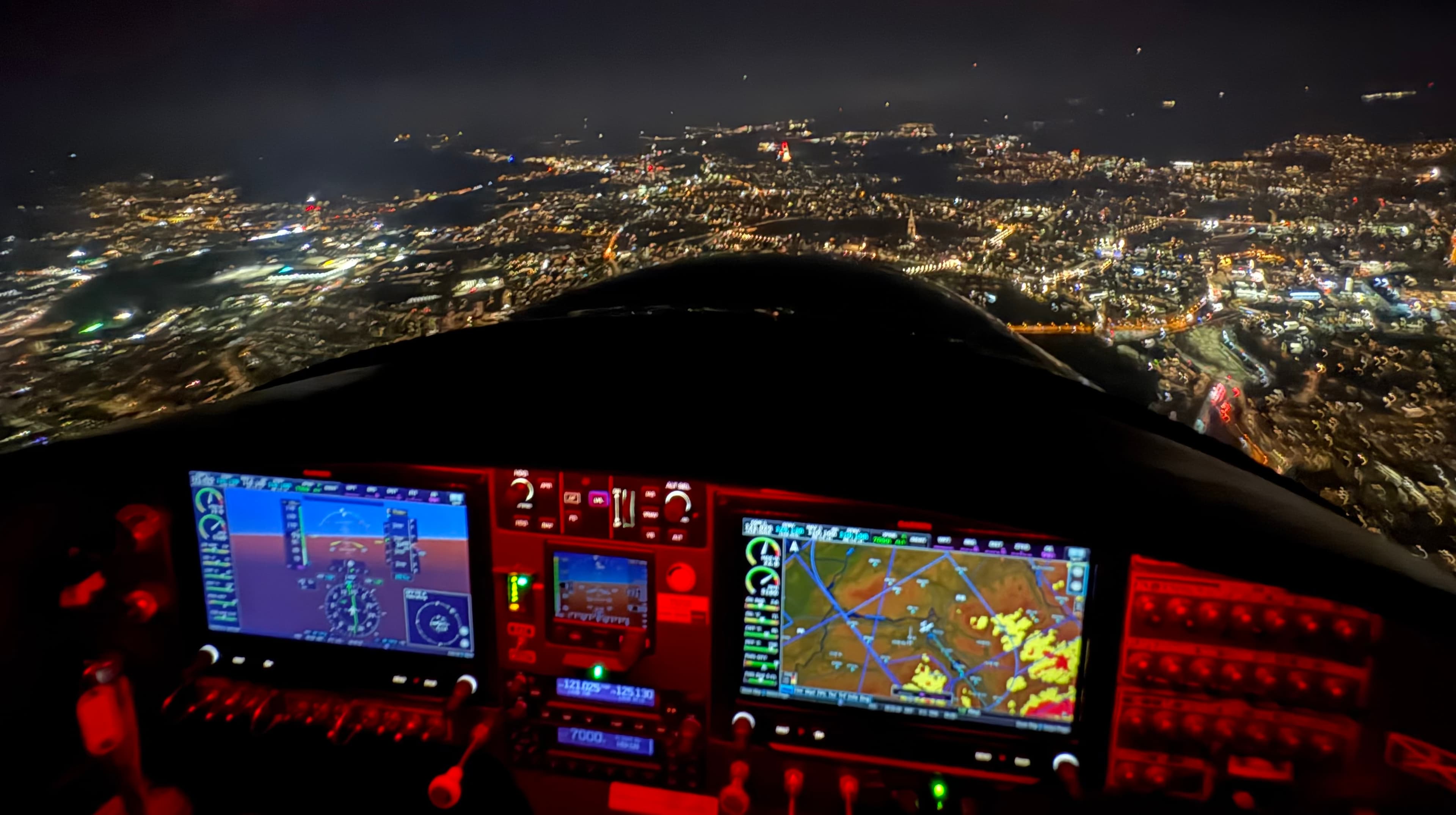
The ATPL(A), or Airline Transport Pilot Licence for aeroplanes, is the EASA licence required to act as pilot-in-command of multi-pilot aeroplanes in commercial air transport, which is the captain's seat of an airliner, and it includes all LAPL, PPL and CPL privileges (FCL.505). It requires an MPL, or a CPL(A) with a multi-engine Instrument Rating and MCC instruction, plus the ATPL(A) theory exams in 13 subjects, a Class 1 medical, 1,500 hours of flight time including 500 hours in multi-pilot operations, and a skill test (FCL.510.A).
What does ATPL(A) stand for?
ATPL(A) stands for Airline Transport Pilot Licence, aeroplane category. It is issued under EASA Part-FCL and represents the complete professional pilot qualification: the CPL(A) permits paid flying, and the ATPL(A) permits command of any aircraft on commercial air transport operations.
A frozen ATPL(A) is industry shorthand (the term does not appear in Part-FCL) for a CPL(A) holder with an MEP class rating, a multi-engine IR(A), the MCC and all ATPL(A) theory examinations passed. The ATPL(A) itself is issued once the pilot has completed 1,500 hours of flight time, including 500 hours in multi-pilot operations, and passed the ATPL(A) skill test (FCL.510.A, FCL.520.A). An unfrozen ATPL(A) is the full licence, with complete command authority, and it is what airline captains hold. Frozen ATPL(A) holders fly as airline First Officers on the co-pilot privileges of their CPL(A) (FCL.305) while they build the hours that unfreeze it.
What can you do with an ATPL(A)?
The ATPL(A) is the qualification for command in commercial air transport. Every privilege of the CPL(A) is included, and the licence adds the roles that airlines and large operators reserve for it.
- -Act as airline captain; until the ATPL(A) is issued, a frozen ATPL(A) pilot flies as First Officer on CPL(A) privileges
- -Fly corporate jet operations
- -Fly for a cargo airline
- -Later, with a separate examiner certificate (FCL.1000), work as a flight examiner
- -Move into chief pilot or operations manager roles
Each of these roles also requires an airline type rating for the specific aircraft flown, a separate qualification added to the licence. Graduates of the alpaviation modular pathway have gone on to fly for Swiss carriers, including Helvetic Airways.
Training requirements
The ATPL(A) is reached by one of two routes. The modular route builds the licences step by step, PPL(A), then ATPL(A) theory, then CPL(A), then IR(A), then MEP and multi-engine IR(A), then MCC, with flight hours accumulated between stages, and it suits candidates who are working or who already hold a PPL(A). The integrated route is a single full-time programme from zero to frozen ATPL(A) in approximately 18 months with around 200 flight hours included. alpaviation offers the modular route. Whichever route is taken, the requirements at the end are the same:
- -A completed CPL(A) and a multi-engine Instrument Rating IR(A); an MPL is the alternative prerequisite (FCL.510.A(a))
- -ATPL(A) theory: a minimum of 650 hours of ground school across 13 subjects on the modular course from PPL(A) (Part-FCL, Appendix 3, Section B), examined through an EASA-approved authority, which most students complete in 12 to 18 months alongside flight training
- -A completed Multi-Crew Cooperation (MCC) course
- -1,500 hours total flight time to unfreeze the licence, including at least 500 hours in multi-pilot operations, 75 hours of instrument flight time and 100 hours of night flying (FCL.510.A)
- -Pilot-in-command and cross-country experience within that total, at the levels set by Part-FCL
- -An EASA Class 1 medical certificate and English language proficiency at ICAO Level 4 or above
The 13 theory subjects are Air Law, Aircraft General Knowledge (Airframe, Systems and Power Plant), Aircraft General Knowledge (Instrumentation), Mass and Balance, Performance, Flight Planning and Monitoring, Human Performance, Meteorology, General Navigation, Radio Navigation, Operational Procedures, Principles of Flight, and Communications (FCL.515). Theory can be taken full-time in the classroom or by distance learning. On the modular route the pathway from PPL(A) takes 24 to 36 months, including theory, hour-building and every rating in between.
ATPL(A) vs CPL(A) at a glance
The CPL(A) is contained within the ATPL(A) pathway. The two licences differ in role, hours, theory and crew requirements:
- -Role: ATPL(A) is required to command multi-pilot aeroplanes in commercial air transport (CPL(A) permits command in commercial air transport on single-pilot aircraft, and co-pilot duties on any aircraft)
- -Hours: ATPL(A) requires 1,500 hours total time (CPL(A) requires 200)
- -Theory: ATPL(A) requires the full 13-subject syllabus with a minimum of 650 hours of ground school on the modular course (CPL(A) accepts the same syllabus or the CPL(A) theory course)
- -Crew: ATPL(A) requires a Multi-Crew Cooperation (MCC) course and a multi-engine IR(A) (CPL(A) requires neither, although the Instrument Rating is essential for most commercial employment)
The alpaviation CPL(A) pathway places the ATPL(A) theory at its third stage, directly after the Class 1 medical, because the 13-subject syllabus satisfies the CPL(A) theory requirement and is the same theory the frozen ATPL(A) is built on.
Medical, language and crew requirements
The ATPL(A) requires an EASA Class 1 medical certificate, the same professional standard as the CPL(A), and English language proficiency at ICAO Level 4 or above. It also requires a Multi-Crew Cooperation (MCC) course; the MCC course certificate is also a prerequisite for the first multi-pilot type rating. The MCC is a distinct course, taken after the CPL(A) and the Instrument Rating, and it is the last of the practical requirements listed for the licence.
A frozen ATPL(A) is a CPL(A) with a multi-engine IR(A), the MCC and 13 examinations passed. An unfrozen ATPL(A) adds 1,500 hours of flying and the skill test, and it is what every airline captain holds.
Is the ATPL(A) right for you?
The ATPL(A) is the licence for a pilot whose goal is the airline flight deck or command of large aircraft. You are a strong candidate if:
- -You want to fly for an airline as First Officer and, in time, as captain
- -You are prepared for a multi-year pathway: 24 to 36 months from PPL(A) to frozen ATPL(A) on the modular route, then hour-building to 1,500 hours
- -You can meet the Class 1 medical standard and ICAO Level 4 English
- -You want to keep working while you train, which the modular route allows at each stage
The ATPL(A) pathway is built from stages that each stand on their own: a PPL(A), a CPL(A), an Instrument Rating, a Multi-Engine rating and an MCC certificate are all usable qualifications before the licence unfreezes. At alpaviation the modular route is trained from Bern-Belp with the Diamond DA42 twin available for the multi-engine stage, and with theory offered full-time or by distance learning.
The ATPL(A) is the top of the EASA licence structure: a CPL(A), a multi-engine Instrument Rating, an MCC course, 13 theory subjects over at least 650 hours of ground school, a Class 1 medical, ICAO Level 4 English and 1,500 flight hours. If the airline flight deck is your goal, we can lay out the modular route from where you stand today.
Frequently asked questions
What is a frozen ATPL(A)?
A frozen ATPL(A) is industry shorthand (the term does not appear in Part-FCL) for a CPL(A) holder with an MEP class rating, a multi-engine IR(A), the MCC and all ATPL(A) theory examinations passed. The ATPL(A) itself is issued after 1,500 hours of flight time, including 500 hours in multi-pilot operations, and the ATPL(A) skill test. Frozen ATPL(A) holders fly as airline First Officers on their CPL(A) privileges while they build those hours. The unfrozen licence carries complete command authority.
How many flight hours does an ATPL(A) require?
The ATPL(A) requires 1,500 hours of total flight time to unfreeze the licence, including at least 500 hours in multi-pilot operations, 75 hours of instrument flight time and 100 hours of night flying. The pilot-in-command and cross-country experience within that total is set by Part-FCL.
How many theory subjects does the ATPL(A) have?
The ATPL(A) theory covers 13 subjects, with a minimum of 650 hours of ground school on the modular course from PPL(A). Most students complete it in 12 to 18 months alongside flight training, by distance learning or full-time in the classroom.
What do you need before an ATPL(A)?
The ATPL(A) requires a completed CPL(A), a multi-engine Instrument Rating and a Multi-Crew Cooperation certificate; the alternative prerequisite is an MPL (FCL.510.A(a)). It also requires an EASA Class 1 medical certificate and English language proficiency at ICAO Level 4 or above.
How long does the modular route to a frozen ATPL(A) take?
On the modular route the pathway from PPL(A) takes 24 to 36 months, including theory, hour-building and every rating in between. Building on to 1,500 hours then unfreezes the licence.
Related reading
Map your route to the ATPL(A)
Speak with our training team about the modular pathway from PPL(A) to frozen ATPL(A): theory options, the Instrument Rating, multi-engine training and the MCC course.
Get in Touch