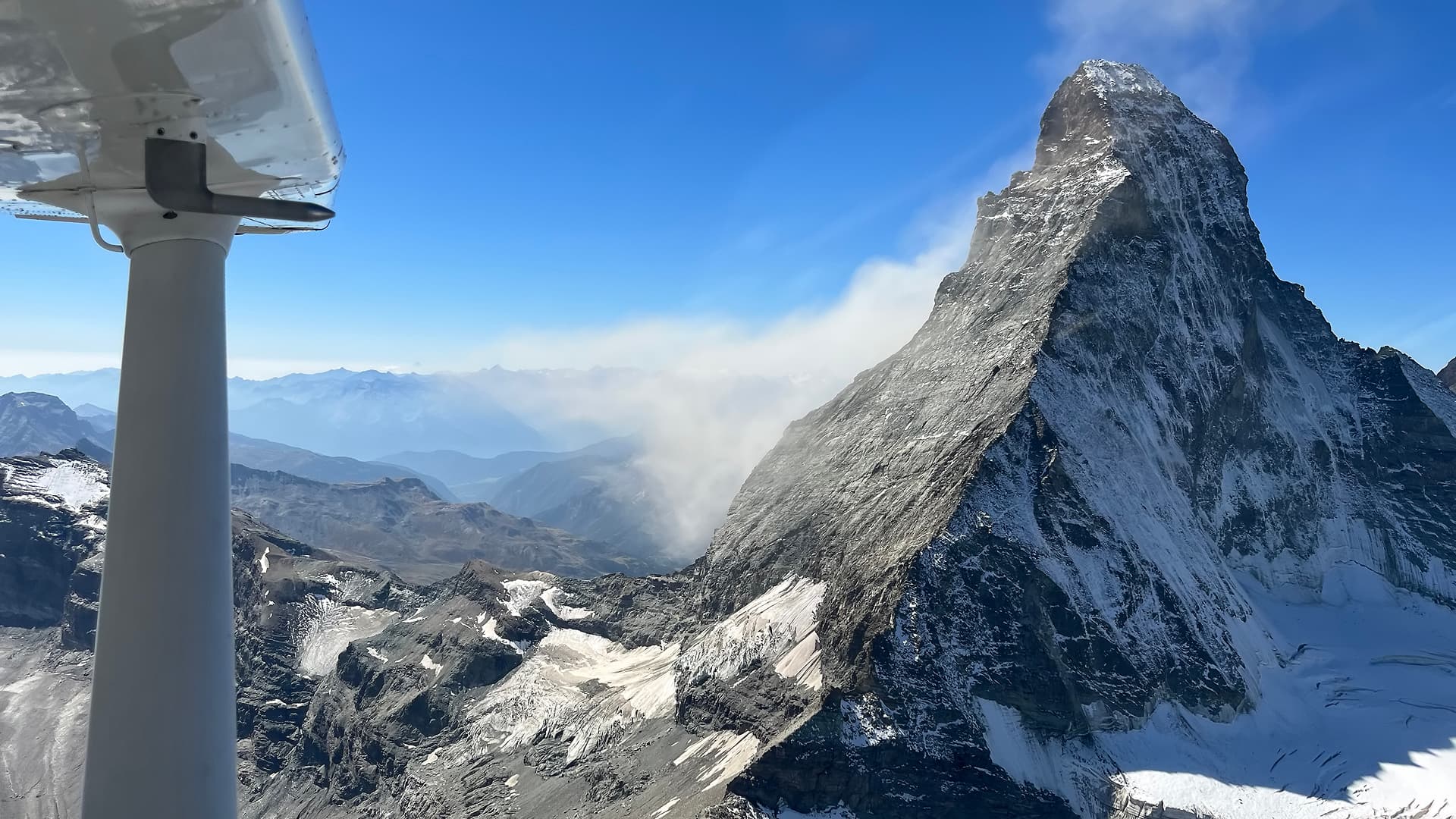
Swiss aviation has a character. You feel it in a pre-flight briefing, in a clearance readback, in the way an instructor stands back and lets a student work a problem through. It is not a style; it is a culture, a set of shared habits built over decades by a small country that decided to do general aviation seriously. This is what it means, and why it matters when you train here.
Precision as Method
Precision in Swiss aviation is not a slogan; it is how work gets done. Checklists are followed line by line. Briefings cover what will happen, what could go wrong, and what the pilot will do if it does. The weather is not glanced at, it is analysed against the route, the aircraft, and the day. The standard is not that procedures exist; the standard is that procedures are used, every flight, by every pilot, including the ones who have done it a thousand times. Students learn this by watching it, then by doing it.
Quiet Competence
You will not hear Swiss pilots announce themselves. The country does not celebrate aviators, and aviators do not celebrate themselves. Competence is expected, not narrated. A thirty-year instructor gives the same briefing to a discovery flight passenger that she gives to a type-rating candidate. A chief pilot makes the same radio call as the trainee. Hierarchy is there, it is simply not loud. What this means for a student: you are trusted to show up prepared, to ask the question when you don't know, and to not perform. The attention goes to the aircraft, not to the person flying it.
Responsibility Without Shortcuts
The pilot in command is the pilot in command. This is not a paperwork position in Switzerland, it is lived. Every decision about weather, fuel, load, and crew is made by the pilot, documented, and owned. The federal framework backs this up: FOCA oversight is strict, and deviations are investigated. But the culture precedes the regulation. Swiss pilots accept that responsibility is the point of the job. From hour one of PPL(A) training, a student is asked what they think, what they plan to do, and why. The answer 'the instructor will decide' does not exist.
The Apprentice's Mindset
A licence in Switzerland is not an arrival. It is a starting permission. Senior captains return to simulators on schedule. Flight instructors take ratings themselves. Check pilots are checked. The underlying view is that flying is a skill that deteriorates without deliberate practice, and that the profession is a thirty-year apprenticeship. Students absorb this early. The good ones stop chasing the licence and start chasing the craft. The rest, over time, join them.
Multilingual, Cross-Border, Unsurprised
Switzerland is small and open. A cross-country from Bern crosses into German, French, and Italian airspace in a single afternoon. Clearances alternate. Procedures differ. Airfields run on local rhythms. Pilots trained here learn to operate across boundaries as a default, not as an advanced module. The result is a quiet cosmopolitanism: a Swiss-trained pilot is not surprised by a French controller, a German regulation, or an Italian weather briefing. By the time you finish training, neither are you.
What You Feel as a Student
If you train in Switzerland, the first thing you notice is the pace. It is not slow; it is deliberate. Lessons build on each other, and your instructor expects you to have done the homework before you open the aircraft door. The second thing you notice is that nobody is in a hurry to sign you off. Competence is demonstrated, then repeated, then repeated again under different conditions. The third thing, and it takes longer to see, is that the culture is starting to live in you. Your checks tighten. Your briefings get clearer. You stop guessing at the weather. You become, gradually, a Swiss-trained pilot. That is what the phrase actually means.
This is the culture we train inside. It is not a brand we put on a hangar door; it is the way our instructors were taught, and the way their instructors were taught before them. When you train at alpaviation, you join that line. What you take from it depends on you, but the standard is not negotiable. That is the point.
Train inside this culture
alpaviation has trained pilots at Bern-Belp for over 38 years. Talk to us about starting.
Contact us