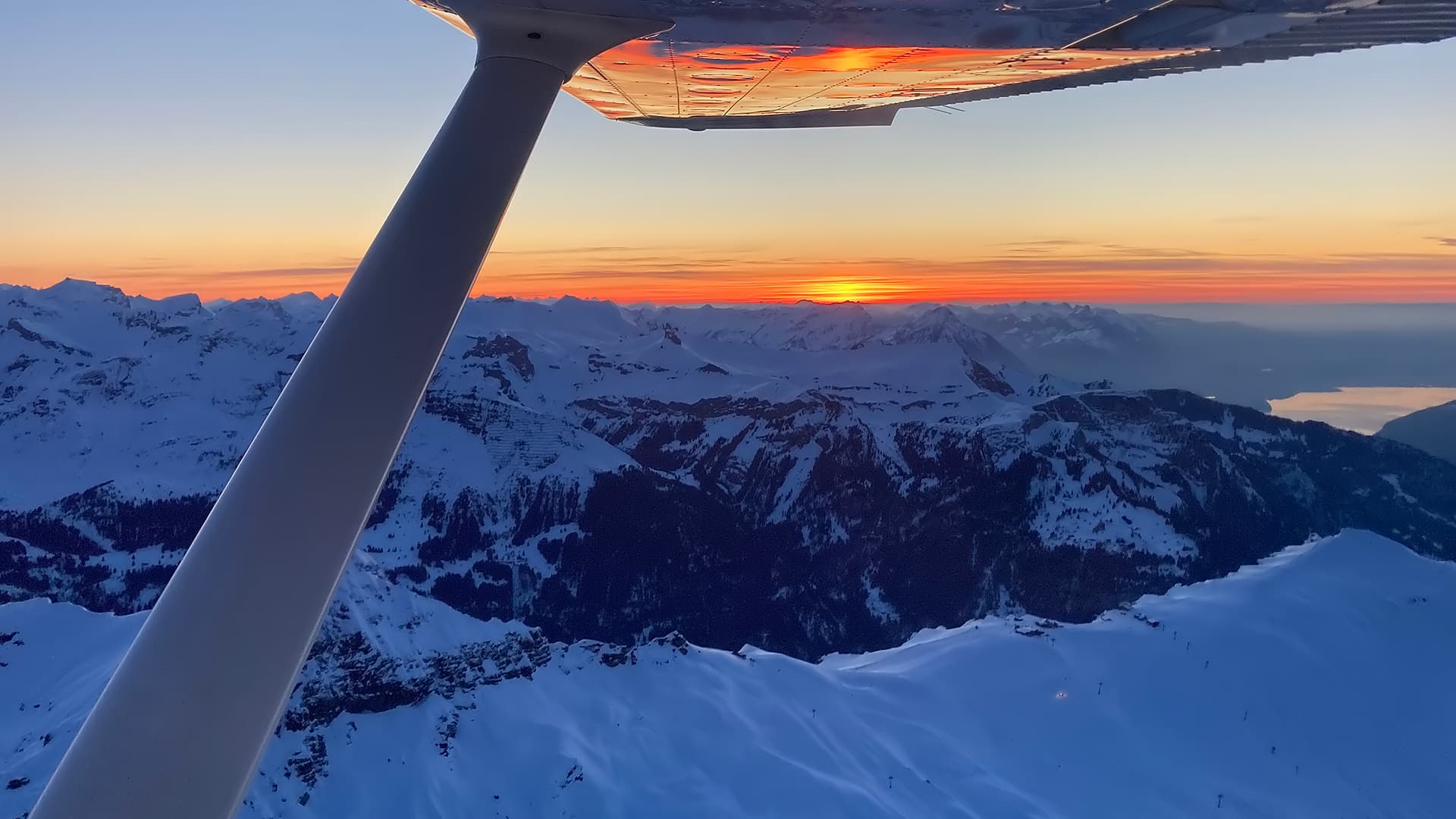
Becoming an airline pilot is one of the most rewarding careers you can pursue, but the path can seem confusing if you do not know where to start. This guide breaks down the entire journey from your first medical exam to the day you sit in an airline cockpit. We will look at each qualification, the time and cost involved, and how alpaviation supports you through every step of the roadmap.
Step 1: Medical Certificate - Your Aviation Passport
Before you fly a single foot forward, you need an aviation medical certificate. In EASA countries, there are two levels: Class 1 (for professional pilots) and Class 2 (for private/recreational flying). Most aspiring airline pilots aim for Class 1 from the start, as you will eventually need it anyway.
The exam is conducted by an Aviation Medical Examiner (AME) and includes vision, hearing, cardiovascular health, and psychological fitness. Most people pass without issue. The certificate is valid for five years (longer if you are older). Cost: CHF 400-600. Timeline: 1-2 weeks from application to certification.
Step 2: PPL(A) - Your First Pilot Licence
The Private Pilot Licence is your foundation. It allows you to fly solo and carry passengers, but not for commercial compensation. Most pilots complete PPL(A) in 3-6 months of modular training.
- -Minimum 45 hours of flying time (includes solo work, navigation, and ground reference maneuvers)
- -9 theory subjects: air law, meteorology, navigation, aircraft systems, performance & planning, human performance, principles of flight, communications, and aircraft technical knowledge
- -Cost: CHF 22,000-26,000 (roughly CHF 400/hour flight training, plus exam fees)
At alpaviation, you train in modern single-engine aircraft - Bristell B23 or Diamond DA20 - in the beautiful airspace around Bern-Belp. You will navigate the Swiss Alps, learn mountain flying basics, and gain confidence over real terrain. By the time you earn your PPL(A), you will have skills that far exceed the minimum.
Step 3: Build Your Hours - The Foundation for Everything
After your PPL(A), you need 150-200 total hours of flying experience before you can take a Commercial Pilot licence. This is your 'hour building' phase - and it is often the most enjoyable part of pilot training. You fly cross-countries across Europe, build experience in different conditions, and gain real-world decision-making skills.
Many pilots combine hour building with scenic flying operations or bush flying to offset costs. Some instruct fellow students. Others simply fly for joy. This phase typically takes 12-24 months depending on how frequently you fly. Cost: CHF 8,000-15,000 for the hours themselves (paying per flight hour).
Step 4: ATPL(A) Theory - The Knowledge Foundation
Before you can become a Commercial or Airline pilot, you must pass 14 EASA theory subjects. These are examined independently - you do not need to pass them all at once. Many pilots complete ATPL(A) theory while building hours, as distance learning makes this feasible.
The 13 subjects cover: Air Law, Aircraft General Knowledge, Flight Performance & Planning, Mass and Balance, Instrumentation, Human Performance & Limitations, Meteorology, General Navigation, Radio Navigation, Operational Procedures, Principles of Flight, Flight Planning & Monitoring, and Communications. Total study load: 650+ hours over 6-12 months. Cost: CHF 4,000-8,000 for self-study or structured courses (exams are CHF 100 per subject). This is one area where online learning works well, and you can study around your flying schedule.
Step 5: Instrument Rating (IR(A)) - Flying Blind, Safe & Legal
The Instrument Rating is your ticket to professional flying. It allows you to operate in cloud, fog, and poor visibility by flying on instruments alone - essential for airline operations. Most commercial pilots earn an IR(A) during their hour-building phase or just before CPL(A) training.
Minimum 50 hours of instrument flying (up to 40 can be on simulator). Cost: CHF 31,000-38,000 for the full rating. Timeline: 3-6 months depending on flying frequency. At alpaviation, you train in the Diamond DA42 twin-engine aircraft and a full-motion simulator, with instructors who have extensive airline experience. This is serious training - it is also the first time you truly understand what 'flying by instruments' means.
Step 6: CPL(A) - Go Commercial
The Commercial Pilot Licence is the legal foundation for getting paid to fly. You have now earned your PPL(A), built 150+ hours, passed ATPL(A) theory, and earned an Instrument Rating. CPL(A) training is focused on precision, professionalism, and flying to airline standards.
Minimum 25 hours of advanced flying (emergency procedures, stalls, steep turns, precision landing, complex engine failures). Cost: CHF 16,000-18,000. Timeline: 4-8 weeks if you fly frequently. This is where you start flying like a professional. Your instructor will demand precision, better decision-making under pressure, and a deeper understanding of aeronautical decision-making.
Step 7: Multi-Engine Piston Rating (MEP)
Most airline jobs - particularly in Switzerland and Europe - require or prefer experience on twin-engine aircraft. The MEP rating is a short addition to your skills: just 6 hours of flying time in a multi-engine aircraft, typically a Diamond DA42.
Cost: CHF 3,000-4,000. Timeline: 1-2 weeks (can be done in a single week if you fly intensively). The MEP rating is often earned alongside CPL(A) training or immediately after. It is a quick, valuable addition to your pilot CV.
Step 8: MCC & JOC - Prepare for the Airline Cockpit
Multi-Crew Cooperation (MCC) and Jet Orientation Course (JOC) are specialized courses that prepare you for airline operations. MCC focuses on crew resource management, communication, and decision-making in a two-pilot cockpit. JOC introduces you to jet aircraft systems and handling characteristics.
These courses are often completed once you have secured a position with an airline or a major flight academy. They are not strictly required for earning a frozen ATPL(A), but they are essential before you operate as a First Officer in an airline environment. Cost: CHF 8,000-12,000 combined. Many airlines provide these courses as part of their cadet programmes.
How Long Does It All Take? Modular vs. Integrated
The total time from zero to airline-ready pilot depends on your training pathway. Two main approaches exist: modular (part-time) and integrated (full-time).
Modular Pathway (Part-Time)
2-4 Years
Train alongside work or study. Fly 1-3 times per week. Total cost spread across years. Ideal for working professionals. This is alpaviation's specialty. You maintain your career, earn income, and progress at a sustainable pace.
Integrated Pathway (Full-Time)
18-24 Months
Full-time commitment from PPL(A) through frozen ATPL(A). Attend a structured academy (like some competitors' offerings). Faster, but requires leaving work or studies. Total cost is higher because you are not earning during the training period.
At alpaviation, we specialise in the modular approach because we believe it produces better pilots. You have time to absorb each phase, practise in different seasons and conditions, and mature as a decision-maker. Your flying hours mean something - they represent real experience, not just a check-box on a timeline.
The alpaviation Advantage
By the time you read this, you understand the roadmap. You know what is required and what it costs. So why choose alpaviation for your training journey? Because we walk the entire path with you - from your first discovery flight to your interview with an airline.
- -Complete training in one place: PPL(A) through ATPL(A) entirely at alpaviation. No need to change schools or search for different instructors. Continuity matters.
- -Modern, diverse fleet: From the Bristell B23 (light and responsive) to the Diamond DA42 (twin-engine powerhouse), you gain experience on aircraft used in real professional operations.
- -Mountain flying expertise: Training at Bern-Belp gives you experience in Alpine airspace - challenging conditions that build real skills and confidence. Airline pilots value mountain experience.
- -EASA-certified ATO: We hold certification CH.ATO.0147. Your EASA PPL/CPL/ATPL is ICAO-aligned and convertible in most jurisdictions worldwide; LAPL is valid in EASA states only (EU-27 + CH + IS + NO + LI). You can walk into any EASA airline or organisation with credentials that are beyond question.
- -Mentorship, not just instruction: Our instructors are former airline pilots, flight engineers, and experienced professionals. They do not just teach you to pass tests - they mentor you toward a career.
The path from zero to airline pilot is long, demanding, and genuinely rewarding. It requires commitment, financial investment, and a genuine love of flying. But if that is your dream, the roadmap is clear. Every step builds on the last. Every certificate and rating opens new doors. And at alpaviation, we have spent 38 years walking this journey with pilots who started exactly where you are now - with a dream and a question: 'How do I get there?' We know the answer. Let us help you find it.
Ready to Start Your Pilot Training Roadmap?
Discuss your goals and timeline with one of our training advisors. We will map out a personalised pathway from your first medical exam to your first airline interview.
Plan Your Journey