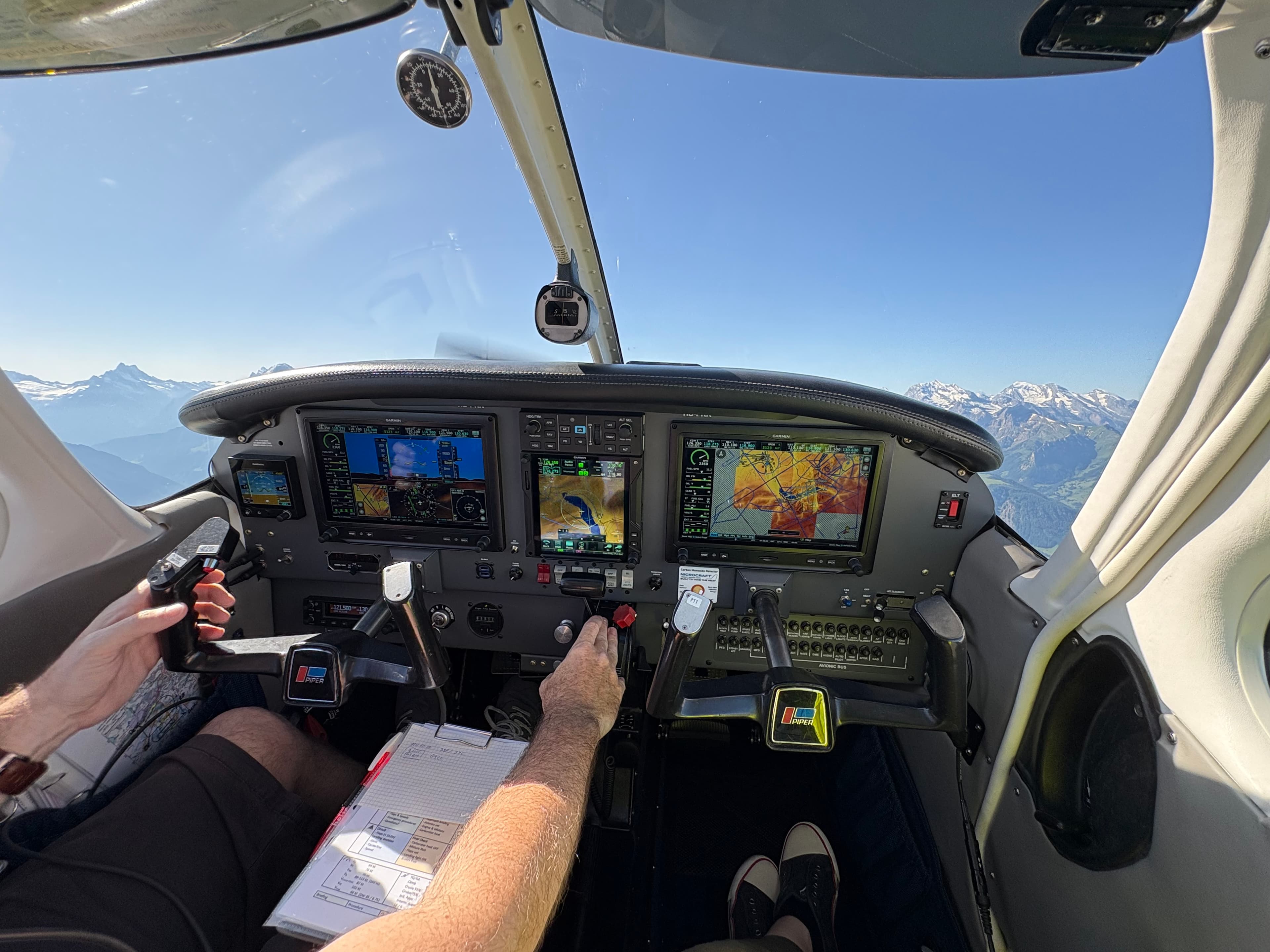
The question we hear most often from career-change pilots is: "Is it too late?" The answer is direct: no. There is no upper age limit for obtaining a pilot licence under EASA regulations. Some of our best students came to alpaviation after 20 years in a completely different profession - accountants, engineers, doctors, business owners, military personnel. They brought maturity, discipline, and clear motivation. And they are now flying for charter companies, corporate operators, and regional airlines. If you are considering a career change to aviation, this guide will show you exactly what that path looks like.
Is it too late? The regulatory answer.
EASA Part-FCL contains no upper age limit for any pilot licence - not the PPL(A), not the CPL(A), not the ATPL(A). You can hold a valid medical and licence well into your 60s, as long as you pass the required aero-medical examination for the age bracket and medical class you are applying for. The medical requirements do change with age, but they are age-appropriate and realistic - designed to assess whether you can safely exercise the privileges of the licence, not to exclude people based on an arbitrary number.
What matters is current medical fitness, not your age when you start. Some career-change pilots bring advantages: they often have higher education, professional experience managing complex systems, and clear life motivation. They know why they want to fly, and they commit to training seriously. That maturity frequently shows in their performance - they progress methodically, ask insightful questions, and take their responsibility to passengers and crew seriously from day one.
Your age when you start is irrelevant. What matters is your fitness now and your commitment to the training ahead.
The modular advantage: training while working
Unlike university programmes or full-time career training in many industries, pilot training in Europe is modular. You do not need to leave your job or restructure your life. At alpaviation, the pathway is flexible - you train at a pace that fits your schedule, your budget, and your life. Many of our career-change students train part-time: one or two flights per week, weekend ground school sessions, and focused study during the week.
- -Train at your own pace - no fixed cohort model or deadlines you cannot control
- -Keep your current job - flight training costs are spread over months, not concentrated in weeks
- -Build experience gradually - part-time training allows for reflection and consolidation between lessons
- -Maintain financial stability - your salary continues while you build toward your new career
This flexibility is crucial for career-change pilots. You are making a significant life decision, and you can do so without immediately giving up your current income. Many pilots finance their training from salary while working - effectively retraining on their own terms, without external pressure or debt-driven timelines.
Realistic timeline: from start to career pilot
The path from zero flying experience to a professional pilot licence is not overnight, but it is measured and predictable. Here is what a realistic modular timeline looks like:
- -PPL(A): 6-12 months part-time. Minimum 45 flight hours, weekly flying and ground school. This is the foundation licence and establishes your basic flying competency.
- -Instrument Rating: 6-9 months after PPL(A). Additional 55 flight hours plus theory and simulator work. Essential for professional flying in European airspace.
- -Commercial Pilot Licence (CPL(A)): 3-6 months after IR(A). Minimum 100 total flight hours with 20 hours of cross-country flying. This is the stepping stone to paid employment.
- -Airline Transport Pilot Licence (ATPL(A)): 6-12 months after CPL(A), plus 1,500 total flight hours. This is the final professional qualification for airline captains.
Total progression: approximately 2-3 years from first flight to CPL(A) (airline-ready), or 3-4 years to ATPL(A) (captain-qualified). This is far shorter than most career transitions. Compare it to law school, medical training, or even many engineering programmes - pilot training achieves a professional qualification in a fraction of that time. And unlike those careers, you are earning as you progress. Regional airline first officers typically earn CHF 60,000-80,000 annually. Once you hold your CPL(A), you can start building the remaining hours toward ATPL(A) while being paid.
Cost reality: the full airline pathway
Cost is a real consideration, and it is worth being straightforward about the numbers. The pathway to a professional pilot licence requires investment, but there are multiple financing options available in Switzerland. Here is what the full progression typically costs:
- -PPL(A): CHF 15,000-20,000. Covers 50-70 flight hours, ground school, medical, and examinations.
- -Instrument Rating: CHF 20,000-25,000. Covers 55+ flight hours, simulator training, theory, and practical test.
- -CPL(A): CHF 18,000-22,000. Covers remaining flight hours, cross-country experience, and skill test.
- -Full pathway to CPL(A)-ready: approximately CHF 80,000-120,000 total, depending on your efficiency and the school you choose. Compare this to university tuition for three years - pilot training is comparable in cost but significantly faster and with clearer employment pathways.
Important: once you hold your CPL(A), you can begin paid flying - which means salary offsets the cost of remaining training toward ATPL(A). Many regional airline first officers complete their ATPL(A) while being employed, with the airline contributing to ratings costs. The total out-of-pocket cost can be lower than it appears, and the timeline to positive cash flow is relatively short.
Medical considerations for career-change pilots
If you are 30, 40, or older, your medical requirements depend on the licence you are pursuing and your current health. For a PPL(A), you need an EASA Class 2 medical certificate, issued by an Aero-Medical Examiner (AME). This examination is straightforward for most applicants in reasonable health - it includes a medical history review, vision and hearing test, cardiovascular assessment, and basic neurological screening. If you have any chronic conditions, they do not automatically disqualify you; they simply require more thorough assessment to ensure they do not impair your ability to safely fly.
For a professional licence (CPL(A) or ATPL(A)), you will need a Class 1 medical, which is more comprehensive than the Class 2 but still achievable for most applicants. The AME will review your entire medical history, conduct more detailed cardiovascular and neurological testing, and may request specialist reports if necessary. Switzerland has experienced AMEs who specialise in aviation medicine, and alpaviation can connect you with a qualified examiner who understands the specific requirements for your age and medical background. The key point: medical examinations can uncover issues early, which gives you time to address them before they become barriers.
Financing options in Switzerland
There are multiple ways to finance pilot training beyond simply saving the full amount upfront. In Switzerland, you have options:
- -Payment plans: most flight schools, including alpaviation, offer instalments spread over the training period, aligned with your progress through the programme.
- -Professional development loans: Swiss banks offer training and development financing - enquire about rates for career-change pilots. Your employer may also have educational support funds or loan programmes.
- -Employer sponsorship: if your current employer sees a benefit in your transition (e.g., you are moving to an aviation-related role within their group), some contribute to training costs or offer sabbaticals.
- -Government support: Switzerland's cantonal employment offices and vocational training programmes may offer support for career transitions - enquire with your local office about pilot training eligibility.
Career paths available to professional pilots
The crucial insight: once you hold a CPL(A), you are employment-ready. You do not need to complete the ATPL(A) before you start earning. Here are the realistic career paths available to Swiss-licensed pilots:
- -Charter and air taxi operators - fly clients on demand flights across Europe. Entry-level pay: CHF 60,000-75,000 annually.
- -Corporate aviation - fly private aircraft for executives and business operations. Entry-level pay: CHF 70,000-85,000 annually.
- -Regional airlines - fly turboprop or regional jet routes as first officer (e.g., Helvetic Airways, SWISS Regional). Entry-level pay: CHF 65,000-80,000 annually.
- -Flight instruction - teach at a flight school while building hours toward ATPL(A). Entry-level pay: CHF 50,000-65,000 plus flying fees.
- -Aerial work - photography, survey, or transport for specialist operations. Pay varies widely but typically CHF 60,000-75,000 base.
The path is clear: PPL(A) (foundation) → IR(A) (essential for European flying) → CPL(A) (professional qualification) → ATPL(A) (captain-qualified). At each step, your options expand. By the time you hold your CPL(A), you are no longer training - you are working. And your employer may contribute to your ATPL(A) completion.
The alpaviation advantage for career-change pilots
alpaviation is specifically structured to support career-change students. We understand the practical, financial, and psychological demands of retraining as an adult. Here is what we bring to your pathway:
- -Modular flexibility - train at a pace that fits your job and budget; no cohorts, no fixed schedules, no pressure to rush.
- -Experienced instruction - many of our instructors transitioned to flying later in their careers. They understand the journey from a different profession.
- -Mentorship, not just instruction - we take an interest in your long-term career goal, not just passing the next exam. We advise honestly on your pathway based on your goals and circumstances.
- -Integrated ground school and flight training - we cover EASA theory thoroughly, so you are prepared for examinations and capable in the cockpit.
Career-change pilots are often our most satisfied students because they come with clear motivation and realistic expectations. They know why they are making this change, and they commit to it seriously. We support that commitment by tailoring the training experience to your life circumstances.
Real example: from a different career to the flight deck
alpaviation graduates include engineers, project managers, military personnel, and business owners who made the transition to professional flying. Many now fly for Helvetic Airways, a regional airline based in Switzerland. They completed their PPL(A) within 9-12 months of starting, added their Instrument Rating within the following 9 months, earned their CPL(A), and entered employment. Within 3-4 years of their first flight, they were flying turboprop aircraft with paying passengers across European routes. Some are now upgrading to captain. Your age when you start does not dictate where you end up.
The question is not whether you are too old to start. The question is whether you are ready to commit to becoming the professional pilot you want to be.
Career change to professional pilot is entirely achievable, medically feasible, and financially manageable with planning. The path is clear, the timeline is realistic, and the career outcomes are real. What matters now is the decision: are you ready? If so, the first step is a conversation. Arrange a discovery flight or consultation at alpaviation, and we will show you exactly what your pathway looks like - the timeline, the costs, the medical requirements, and the career options that will be open to you. You have the capacity. The question is whether you have the commitment. We will help you find out.
Related reading
Begin your path to professional pilot
Career change to flying is possible at any age. Arrange a discovery flight or consultation with our team, and we will show you exactly what your pathway looks like - timeline, costs, medical requirements, and realistic career outcomes.
Get in Touch