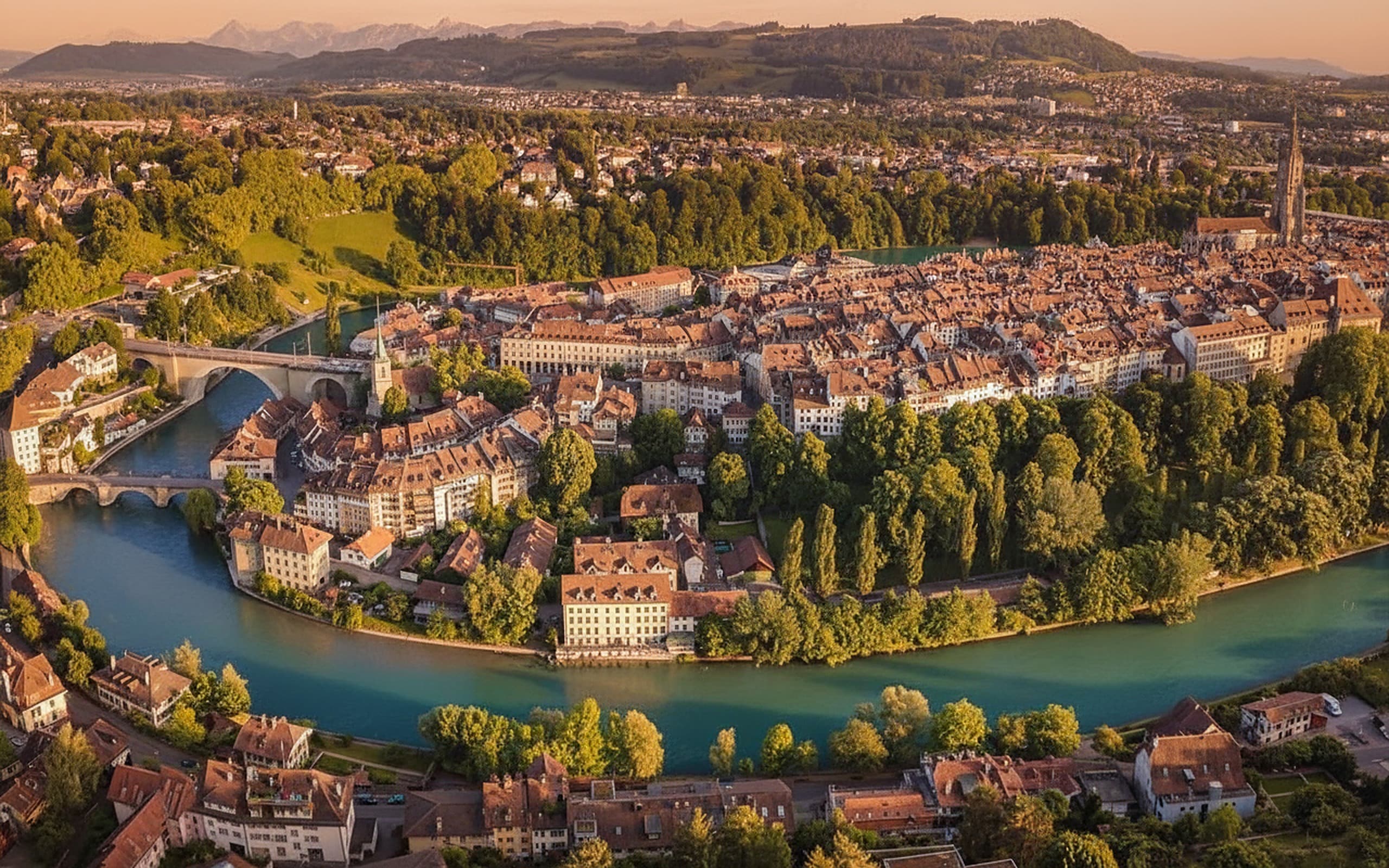
In 2026, ECA International ranked Bern the world's most livable city for expatriates. Mercer's Quality of Living index placed it ninth globally, with four Swiss cities in the top ten. These rankings reflect something tangible: Bern offers a rare combination of safety, infrastructure, natural beauty, and opportunity. For pilot trainees, especially those relocating to pursue professional aviation, this matters. The environment you live and train in shapes your experience, your focus, and ultimately your success.
The Numbers: Bern's Global Standing
ECA International's 2026 Liveability Index measures 450+ locations worldwide, evaluating housing, transportation, safety, healthcare, education, and cost of living. Bern ranked number one. Mercer's 2024 Quality of Living survey ranked Bern ninth globally, one of four Swiss cities in the top ten (Zurich first, Geneva third, Basel tenth). No other country achieves this concentration at the top. For international flight students choosing where to base their training, these factors translate into tangible advantages, fewer distractions, lower stress about daily logistics, and the ability to focus entirely on becoming a better pilot.
Safety: A Foundation, Not a Feature
Switzerland's crime rate is among the lowest in Europe. In Bern, personal security is something you simply do not think about. You can rent an apartment in any neighborhood without hesitation. You can walk home at any hour. When you are learning to fly, your mental energy should be devoted entirely to the task. Every bit of cognitive load matters. If you are worried about neighborhood safety or navigating bureaucratic housing instability, you are not fully present for your training. In Bern, these concerns do not exist.
Precision and Order: The Swiss System
Switzerland's reputation for precision is structural. Trains arrive within seconds of their published time. Contracts mean what they say. For pilot training, this matters enormously. Your aircraft will be maintained to exacting standards. Your instructor will arrive at the scheduled time. Your curriculum will be delivered as promised. alpaviation, based at Bern-Belp Airport, operates within this system. Training meets EASA standards not because someone is watching, but because the Swiss standard is the standard. The culture that makes Bern livable, order, reliability, accountability, is the same culture that produces excellent flight training.
Natural Beauty: The Gym and the Classroom
The Gurten hill rises directly above the city, a 20-minute hike delivering sweeping views of the Aare valley and the Alps. The Aare river itself, which loops around Bern in a dramatic omega pattern, offers swimming and rowing. The Alps are within 90 minutes by car or train. For pilots, this is significant. The more time you spend in the Alpine environment, hiking, observing weather patterns, understanding terrain, the better your mental model of the airspace you will be flying in. Regular access to nature is also non-negotiable for sustained learning. The stress of professional training requires recovery. In Bern, recovery is as simple as stepping outside.
20 Minutes to the Airport
Bern-Belp Airport is 20 minutes from the city center by bus. No shuttle required. Reliable public transport every 15 minutes. From your apartment in Bern's Altstadt, you can reach the flight line in less time than most training locations allow. Over 200+ flight hours, that time compounds. You can live in a neighborhood you enjoy, walkable, culturally rich, and be at the aircraft in 20 minutes.
Multilingual and Connected
Bern is German-speaking, but English is widely spoken. French is 30 minutes away. Italian is 90 minutes south. For international pilots, this multilingual environment is valuable. Aviation English is mandatory, but cultural fluency deepens your integration and career options. Bern's position as the Swiss capital means excellent high-speed rail to every major European city and direct flights to London, Paris, and Amsterdam. You are not isolated, you are positioned.
The Cost Question
Switzerland is expensive. Housing costs are high. Restaurant meals cost more than elsewhere. But this reflects high salaries, high-quality services, and a high standard of living. For pilot trainees, the equation is different. You are not moving to Bern to save money, you are moving to train properly. The cost of flight training (CHF 60,000-120,000 for PPL(A) through CPL(A)) is the dominant expense. Accommodation adds perhaps 10-15% to that total. The quality gain, training in a stable, safe, precision-focused environment, justifies the premium.
UNESCO and Medieval Streets
Bern's Altstadt has been a UNESCO World Heritage Site since 1983. Six kilometres of covered arcades allow you to walk through the medieval city center in almost any weather. The Zytglogge has marked hours since 1530. The Munster Cathedral, begun in 1421, still dominates the skyline. This is not tourist theater, it is continuity. You live in a city that has valued craftsmanship and precision for six centuries. Walking through medieval streets, beneath 500-year-old arcades, past buildings that have outlasted empires, provides perspective during the stress of training.
Why Location Matters in Pilot Training
The best training happens when students are focused, when they are not fighting infrastructure, when they are in an environment that values precision and safety as cultural norms. Bern's combination of exceptional liveability, Alpine geography, Swiss reliability, and proximity to Bern-Belp Airport creates conditions where pilot training thrives. The instructors at alpaviation know the local airspace intimately. The aircraft are maintained to Swiss standards. And when you leave the flight line, you have immediate access to one of the world's most livable cities.
Train Where It Matters
Join pilots from around the world who chose Bern and alpaviation. Modular flight training in an environment built for success.
Contact Us